
Pine County Arrest Warrants Explained
An arrest warrant lets officers take a named person into custody on a criminal charge. In Pine County, a district court judge issues it after reviewing a complaint and the sworn facts behind it. The standard is probable cause. Minnesota Criminal Procedure Rule 3.01 reflects that approach: courts generally prefer a summons. A warrant comes out when the facts suggest the person may not appear, cannot be found, or poses a risk of harm. That choice shapes everything that follows.
Pine County Arrest Warrant Probable Cause
In Pine County, the warrant process starts with paperwork. An officer or a prosecutor files a complaint and lays out the supporting facts. A judge reviews that material, sometimes along with sworn testimony, and weighs whether probable cause truly exists. Rule 3 frames the decision. Its text below sets the issuance and execution steps both a judge and an officer must follow for an arrest warrant.
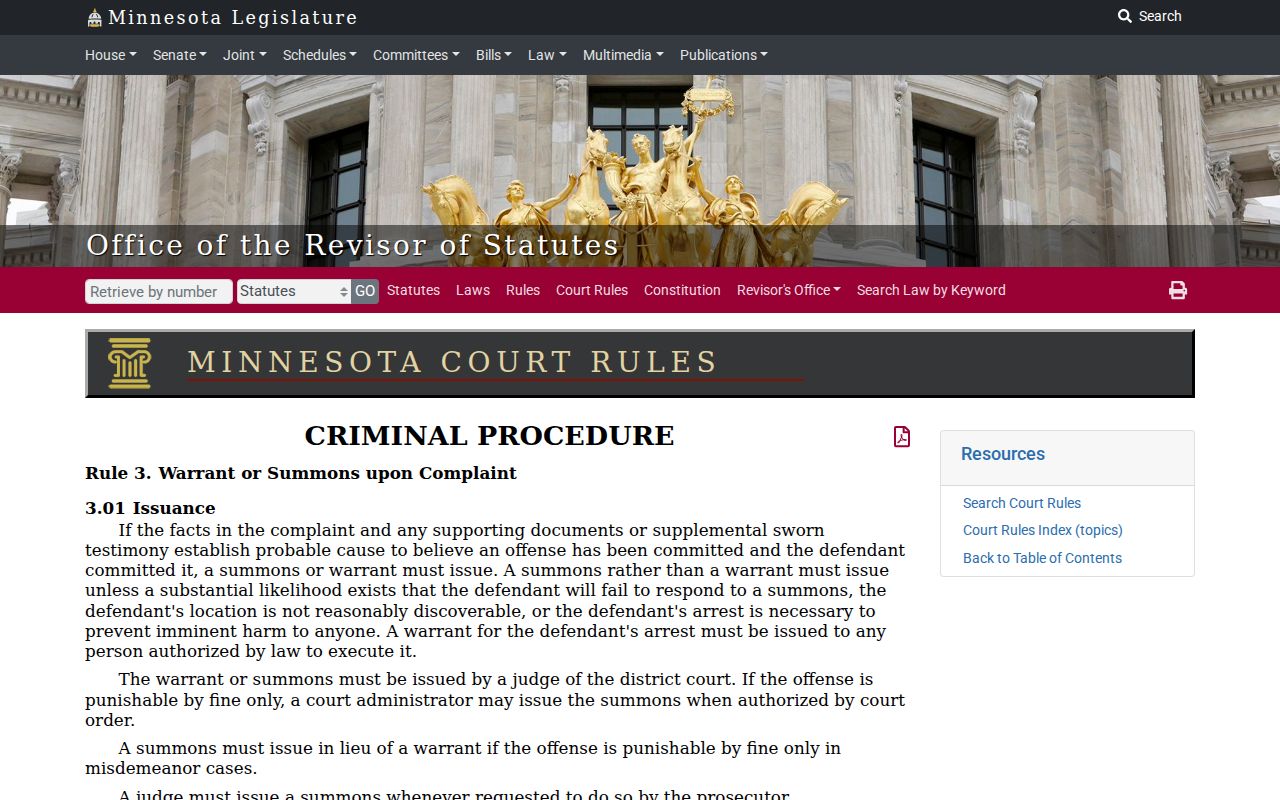
Source: Minnesota Criminal Procedure Rule 3. It governs summons versus warrant, warrant contents, and execution in Pine County and statewide.
Inside a Pine County Arrest Warrant
Rule 3.02 sets the required contents. Every Pine County warrant must carry them, which is why an officer can execute one without ever holding the printed paper.
| Judge's Signature | The warrant must be signed by a judge; a warrant is a court order, not a police form. |
|---|---|
| Named Defendant | The person the order identifies and authorizes officers to arrest. |
| Offense | A description of the charge the complaint supports. |
| Bail or Conditions | The release terms the court sets, which may include an amount, conditions, or both. |
| Case Number | The file identifier that links the warrant to the court record and the Register of Actions. |
An archived Pine County list shows extra columns. They include warrant date, warrant number, a bond block, and a Night Capped indicator. Those fields sketch the county's older warrant records.
Pine County Arrest Warrants vs Search Warrants
A search warrant works differently. It authorizes officers to search a place or an item, not to arrest a person, and it sits in its own court file. Access rules flip, too. Minnesota presumes adult criminal search warrants public once filed in the public search-warrant file, the opposite of the arrest-warrant index rule that shields Pine County records before custody. Juvenile search warrants are filed confidentially.
Note: a search warrant in the public file proves nothing about whether an arrest warrant exists for anyone.
Serving Arrest Warrants in Pine County
The Pine County Sheriff's Office is the service channel for arrest warrants here, working through patrol, investigations, civil process, and records divisions. City policing runs mostly on contracts. Pine City routes its police calls to the sheriff, while Sandstone and Hinckley show up in sheriff reports as well. Under Rule 3.03, a warrant carries force statewide, so execution is not limited to one spot. An officer need not carry the physical paper. Verbal notice of the warrant and its charge is enough. Service can occur at a home, at a traffic stop, or at a courthouse appearance on some other matter. Once arrested, the person goes before a judge as Rule 4 directs, and that is where bail and conditions get sorted.
Comparing Arrest, Summons, and Bench Warrants
Three instruments, three different outcomes. Which one applies in Pine County tells you whether to expect a knock at the door, a letter in the mail, or a court date on the calendar.
| Feature | Arrest Warrant | Summons | Bench Warrant |
|---|---|---|---|
| What it orders | An arrest on a charge | An appearance on a set date | An arrest for a missed obligation |
| Basis | Probable cause of an offense | A charge that does not require custody | A missed appearance or violated condition |
| Who issues it | A judge on a complaint | The court directing the case | The judge in the missed case |
| How to respond | Surrender, bond, or counsel | Appear on the date | Recall or appear |
When a Federal Warrant Is Not in Pine's Systems
Pine County sits in the U.S. District Court for the District of Minnesota, which serves every Minnesota county and groups Pine with the Duluth division. Federal charges never touch county systems. A federal warrant stays off any Pine County list. Federal case access runs through the court's own records, and it costs money. The public-access service charges per document page with a cap per document, and a search that returns nothing can still generate a small charge. Access inside a federal courthouse is free. The district's official page is the routing point for its courthouses and divisions.
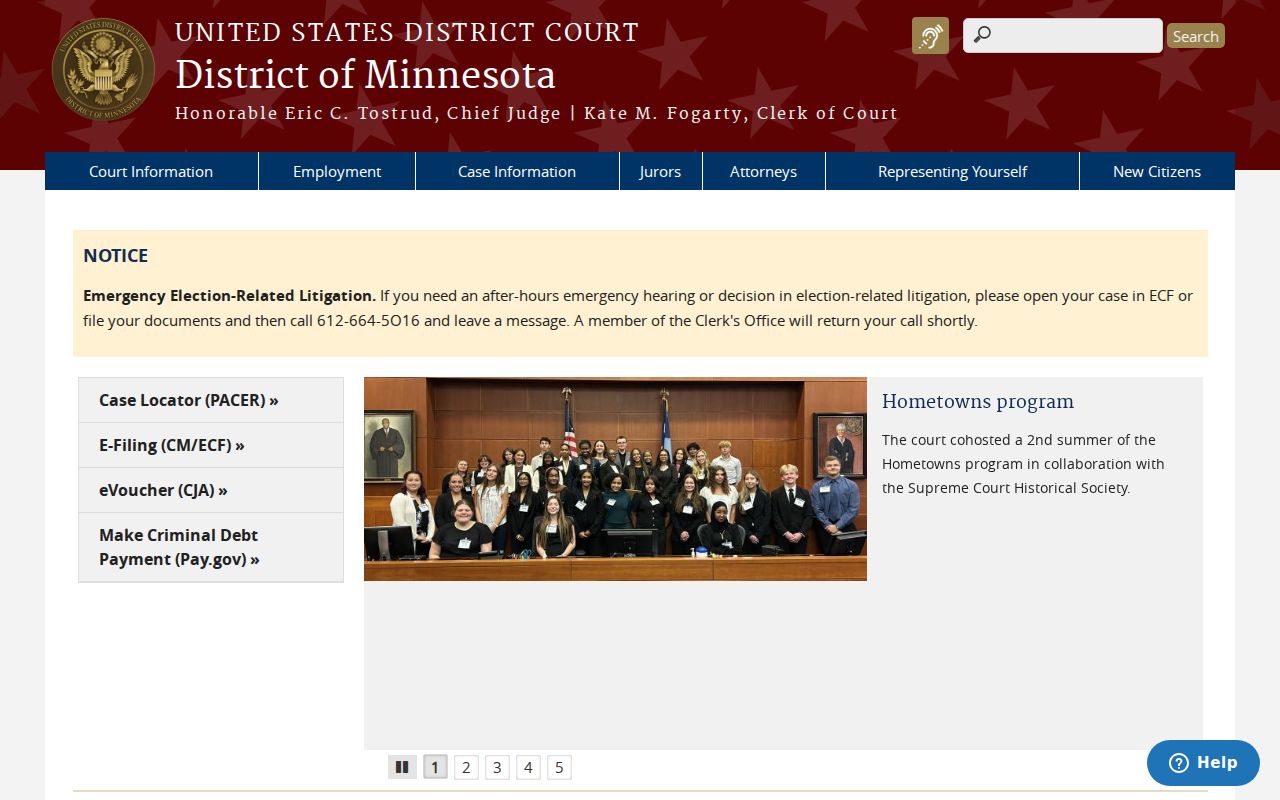
Source: U.S. District Court, District of Minnesota. That page lists the district's courthouses and divisions. A warrant that never shows in Pine County's systems is confirmed through the federal Clerk's Office or a federal defense attorney. Access runs through the judiciary's paid search. A known case number goes straight to the docket.
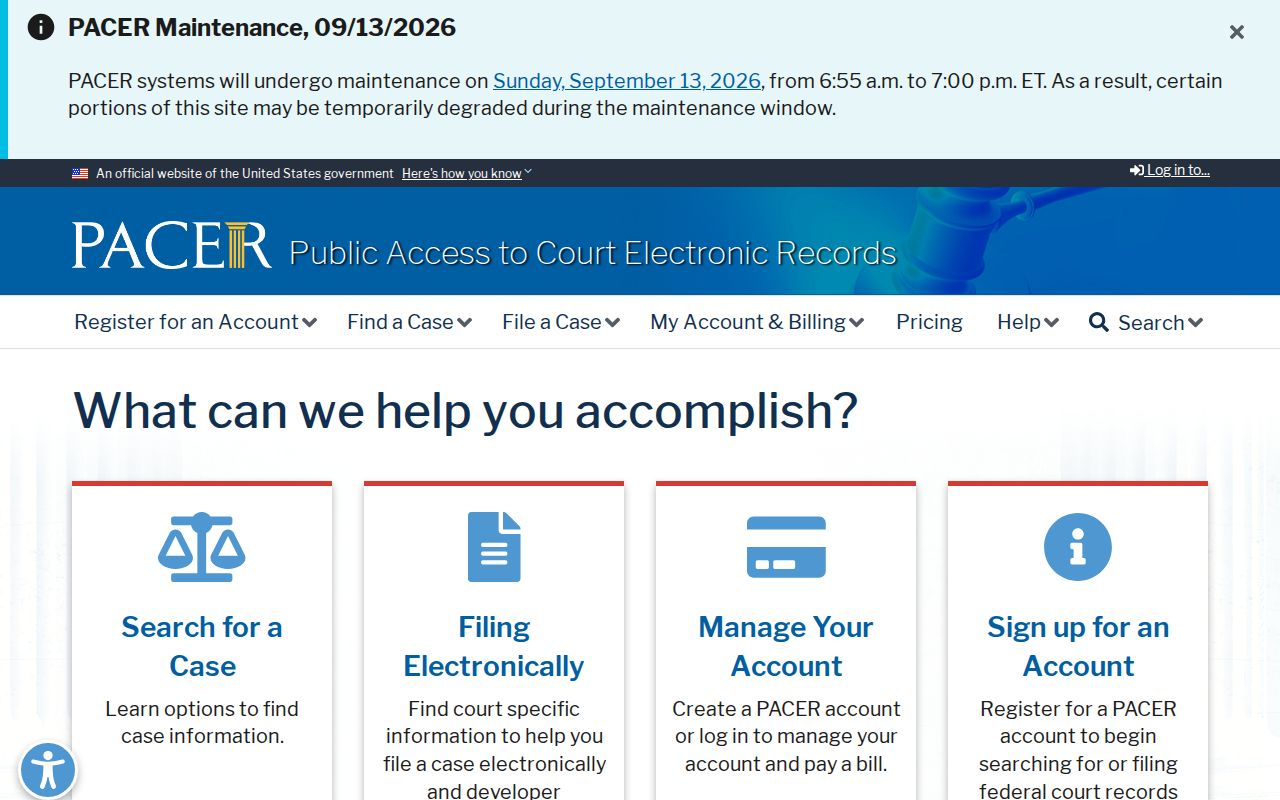
Source: PACER. Registration is free, document pages carry a per-page fee with a per-document cap, low quarterly balances are waived, and Pine County's federal cases sit in this system.
If There's an Arrest Warrant for You
A phone call or text demanding payment is not proof of anything. Neither is a vague threat about a Pine County warrant. Verify the case first, with counsel if you can. Court Administration answers at 320-591-1500, and the Sheriff's Office at 320-629-8380. Once the warrant is confirmed, three paths open up. Voluntary surrender hands the timing to the court. Posting bond can get a person released while the case moves forward, and a motion to recall or quash asks the judge to withdraw the warrant outright. A bench warrant travels the same recall route in Pine County.
Important: Talk to a lawyer before you surrender, and confirm the jail's intake instructions rather than assuming visitation hours apply.
What Happens at the First Appearance
Rule 4 sends a person arrested on a warrant straight to a judge. That first appearance sets release terms. It also gives the case its next date. In Pine County, release decisions begin with personal recognizance or an unsecured bond. Tighter conditions come only when the court sees a reason for them. An appearance-only bond may be an option through a state-approved agent on the official bond form.
Note: no Pine County bond schedule is published, so the amount in the current order is the only figure that matters.